

How to read a certificate of analysis (COA) for research peptides
In short
A COA reports one laboratory’s results for one sample from one batch. Purity (HPLC) is the main peak’s share of detected material; identity (mass spectrometry) checks it is the right molecule; content is how much material the vial held. Read all three, match the batch to your vial, and verify the report with the laboratory.
A certificate of analysis (COA) is a laboratory’s report on a sample from one batch of material. For research peptides it is usually the most useful document a supplier can give you. It is also the most misread one. This guide walks through a typical peptide COA field by field, explains what the two core methods measure, and lists the limits that no certificate can overcome.
The parts of a peptide COA
| Field | What it tells you | What to check |
|---|---|---|
| Laboratory name and report number | Who did the work, and how to find the record | Can you look the report up at the laboratory? |
| Sample / product name | What the client said the sample was | Does it match the product you are buying, including variants such as “no DAC”? |
| Batch or lot number | Which production batch was sampled | Does it match the vial label? |
| Test date | When the analysis was done | Is the batch you would receive the one tested? |
| Purity (%) | Share of the main peak in the HPLC trace | Is the method stated? Is it a single peptide or a blend? |
| Identity / mass | Whether the measured mass matches the expected molecule | Is an observed mass reported, not just “conforms”? |
| Content / quantity (mg) | How much material the vial contained | Compare with the label; it is a different number from purity |
Purity: what HPLC measures
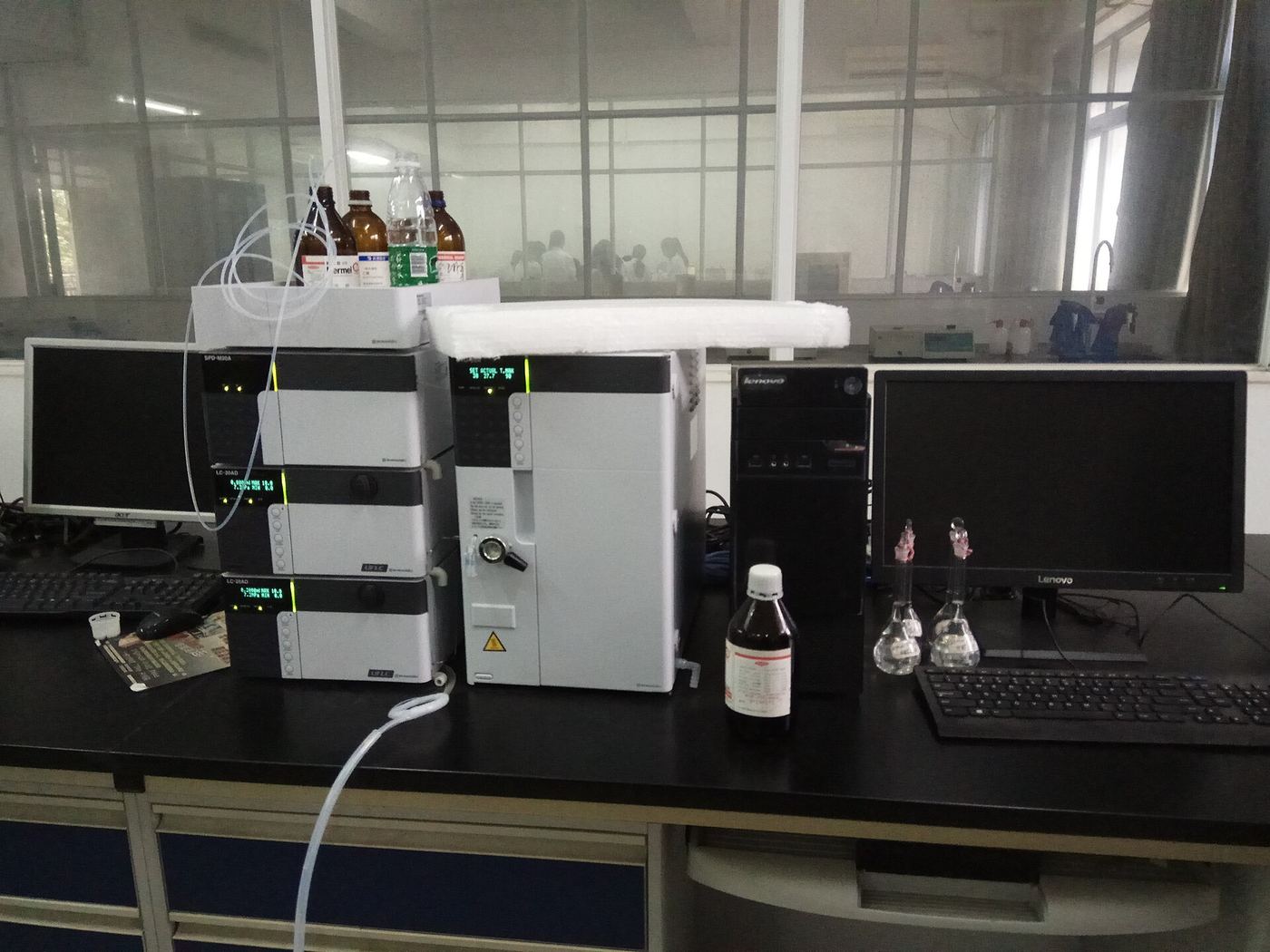
High-performance liquid chromatography (HPLC) separates the components of a sample as they pass through a column. A detector draws them as peaks over time. For a synthetic peptide, the main peak is the target sequence and smaller peaks are related impurities, such as truncated or modified sequences. “Purity” is normally the main peak’s share of total peak area at the detection wavelength.
Two consequences matter. First, purity is a ratio. A sample can be 99% pure and still contain less material than the label says. Second, HPLC purity only covers what the detector sees. Water, salts and counter-ions such as acetate or trifluoroacetate do not show up in that percentage. The literature on peptide impurities and counter-ions explains why the “peptide content” of a powder is always below 100%.
Identity: what mass spectrometry adds
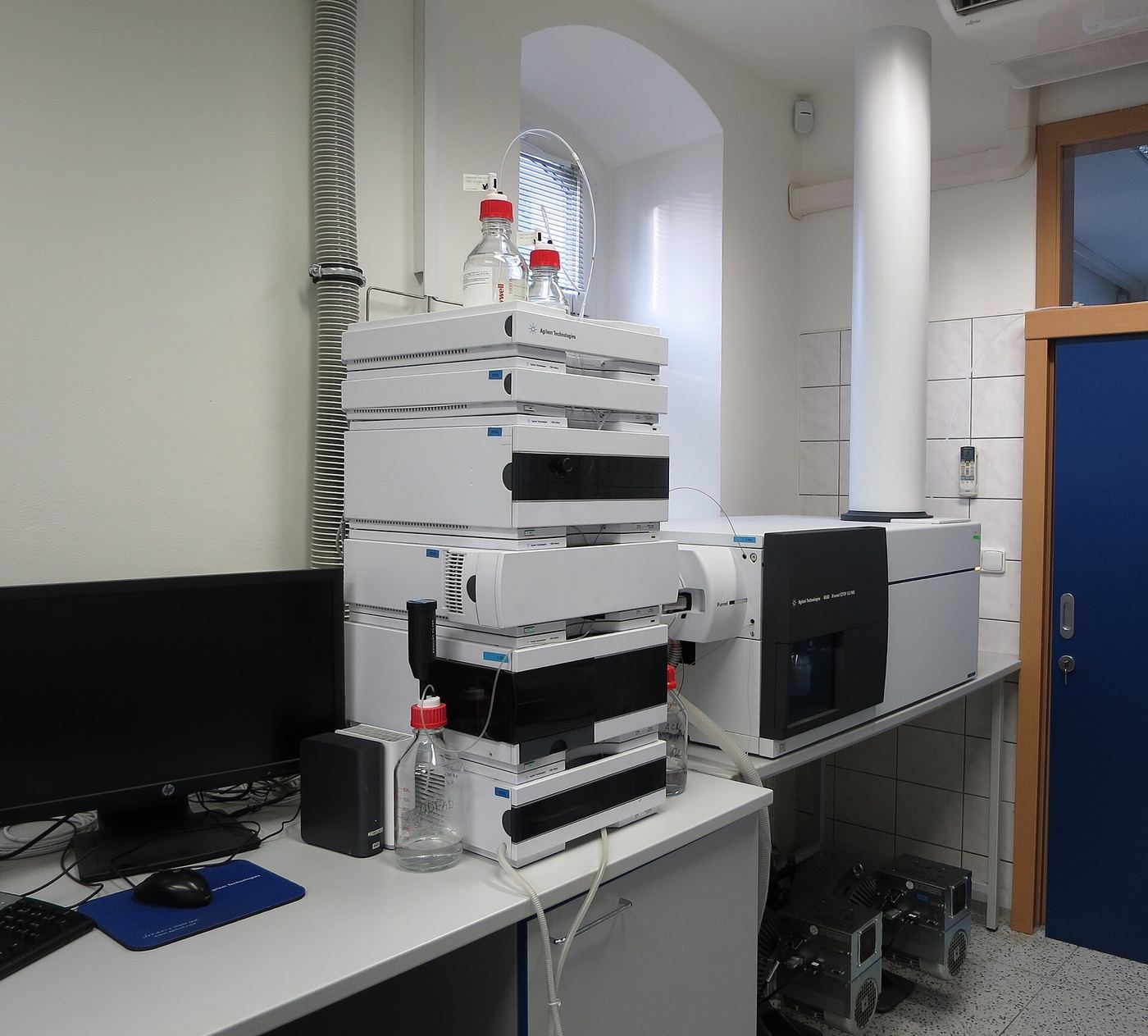
Mass spectrometry (MS), often electrospray ionisation (ESI-MS) for peptides, measures the mass of the molecules in the sample. If the observed mass matches the expected mass of the sequence, that is evidence the main component is the right molecule. A purity figure without an identity result tells you the sample is mostly one thing, but not which thing.
Content is not purity
Many peptide certificates also report quantity, such as “10.33 mg” for a 10 mg vial. That figure answers a different question: how much material was in the tested vial. It can be above or below the label. In the partner certificates we reviewed for this guide, a 10 mg BPC-157 vial measured 9.72 mg, and two 100 mg GHK-Cu vials from different batches measured 86.10 mg and 109.58 mg. Blends are often reported only by content for each component, because one purity figure cannot describe several peptides.
What a COA cannot show
- Other batches. A certificate covers the sample tested, from that batch.
- Handling after testing. Storage, shipping and time all happen after the report was issued.
- Tests that were not run. Endotoxin, sterility and heavy-metal results appear only if the laboratory ran those tests. Some supplier libraries in our directory include them; many do not.
- Suitability for any use. A COA is an analytical report, not an approval.
A note on accreditation
ISO/IEC 17025 is the international standard for the competence of testing laboratories. Accreditation applies to specific methods at a specific laboratory. If a supplier says its laboratory is “accredited”, ask for which tests, and check with the accreditation body.
Next step: verify the report
Reading a certificate correctly is half the job. The other half is confirming that it is genuine, which our guide on verifying third-party testing claims covers.
Questions
Why is measured content sometimes above the label?
Content reflects what was weighed into the vial and how the laboratory measured it, including for complexes such as GHK-Cu. It is a different number from purity.
Is 99% purity the same as 99% peptide?
No. HPLC purity is a ratio of detected peaks. Water, salts and counter-ions are not part of that percentage.
What does “tested by content” mean for a blend?
For a blend, the laboratory reports how much of each component is present instead of one purity percentage, because one figure cannot describe several peptides.
9 sources
Sources
- Analytical method Mant CT, et al. HPLC analysis and purification of peptides. Methods Mol Biol, 2007 (opens an external site in a new tab) link checked 2 Oct 2026
- Analytical method Ho CS, et al. Electrospray ionisation mass spectrometry: principles and clinical applications. Clin Biochem Rev, 2003 (opens an external site in a new tab) link checked 2 Oct 2026
- Analytical method D'Hondt M, et al. Related impurities in peptide medicines. J Pharm Biomed Anal, 2014 (opens an external site in a new tab) link checked 2 Oct 2026
- Analytical method Sikora K, et al. The Role of Counter-Ions in Peptides — An Overview. Pharmaceuticals, 2020 (opens an external site in a new tab) link checked 2 Oct 2026
- General reference ISO/IEC 17025 — Wikipedia (opens an external site in a new tab) link checked 2 Oct 2026
- Official / regulatory Guideline on the development and manufacture of synthetic peptides — EMA (published Dec 2025, effective 1 Jun 2026) (opens an external site in a new tab) link checked 2 Oct 2026
- General reference High-performance liquid chromatography — Wikipedia (opens an external site in a new tab) link checked 2 Oct 2026
- General reference Mass spectrometry — Wikipedia (opens an external site in a new tab) link checked 2 Oct 2026
- Supplier document SHLabz — Lab results (batch testing results) (opens an external site in a new tab) link checked 14 Oct 2026
Educational information only — not medical, dosing or legal advice. Report an error
Read next
Sourcing & suppliers
How to verify a third-party laboratory testing claim
Sourcing & suppliers
How to match a vial’s batch number to its certificate
Formats & handling