

Lyophilisation and storage: what the analytical literature says
In short
Freeze-drying removes the water that many degradation reactions need, so a sealed dry vial is the most stable research format. Moisture, heat and light still matter. In solution, water-driven reactions and interface stresses return, which is why pens and sprays stay in the UAE.
Most research peptides are sold as a lyophilised (freeze-dried) powder in a sealed vial. That format is not a marketing choice. Removing water is one of the main ways the pharmaceutical literature describes for keeping peptides and proteins stable during storage and transport. This guide summarises what that literature says, in laboratory terms only.
What freeze-drying does
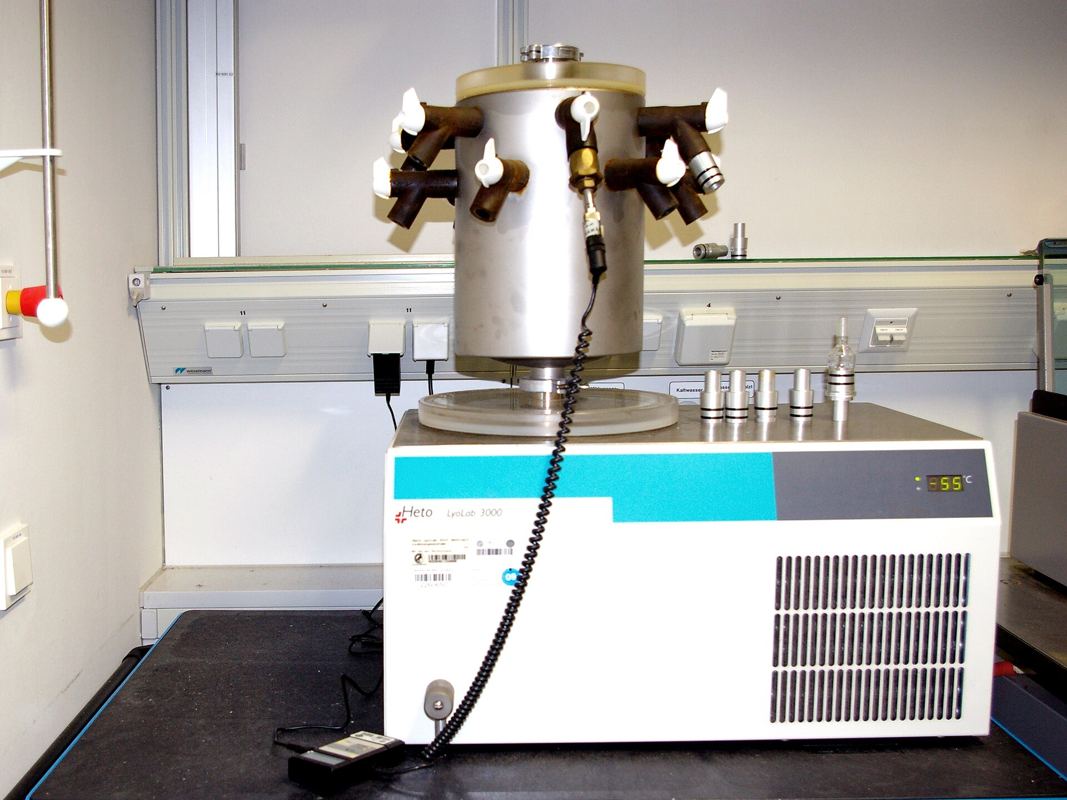
Lyophilisation freezes a solution and then removes the ice under vacuum, leaving a dry “cake”. Wang’s review of solid protein formulations explains why this matters: many of the chemical reactions that degrade peptides and proteins, such as hydrolysis and deamidation, need water. A dry solid slows them down. The US FDA’s inspection guide for lyophilised products also treats the process as a controlled manufacturing step, with residual moisture and container closure checked as quality attributes.
What still matters for a dry vial
- Moisture. A dry cake can take up water if the seal is compromised. Residual moisture is one of the attributes manufacturers measure.
- Temperature. Dry does not mean immune to heat. Storage conditions should follow the label or the supplier’s written guidance.
- Light. Some sequences are light-sensitive; storing vials in their packaging, away from direct light, is a common laboratory convention.
Why solutions are treated differently
Once a peptide is in solution, water-driven reactions are possible again, and new stresses appear. Li and colleagues describe how air–liquid and solid–liquid interfaces, agitation and contact with container surfaces can cause aggregation of biologics in solution. This is one reason suppliers in our directory treat pre-filled pens and nasal sprays (which hold the peptide in solution) as UAE-only, refrigerated formats, while sealed vials travel further.
Storage during distribution
The WHO’s good storage and distribution practices for medical products set out the principles regulated supply chains follow: storage conditions defined by the label, monitored temperatures, and records along the way. Research reagents are not medical products, but the same questions are useful when reading a supplier’s delivery terms: does it say how parcels are packed, whether delivery is cooled, and how long transit takes?
What to look for in a supplier’s documents
- A stated storage condition on the label or product page.
- Whether delivery is cooled, and to which countries — in our directory, cooled delivery stops at the UAE border.
- A certificate dated close to the batch you would receive.
This guide describes laboratory storage only. It is not guidance on preparing or using any product, and nothing here is medical advice.
Questions
Does this guide explain how to prepare a product?
No. It covers laboratory storage of sealed materials only and is not guidance on preparing or using any product.
5 sources
Sources
- Analytical method Wang W. Lyophilization and development of solid protein pharmaceuticals. Int J Pharm, 2000 (opens an external site in a new tab) link checked 2 Oct 2026
- Official / regulatory Guide to Inspections of Lyophilization of Parenterals (7/93) — US FDA (opens an external site in a new tab) link checked 2 Oct 2026
- Analytical method Li J, et al. Interfacial Stress in the Development of Biologics. AAPS J, 2019 (opens an external site in a new tab) link checked 2 Oct 2026
- Official / regulatory TRS 1025 — Annex 7: Good storage and distribution practices for medical products — WHO, 2020 (opens an external site in a new tab) link checked 2 Oct 2026
- General reference Cold chain — Wikipedia (opens an external site in a new tab) link checked 2 Oct 2026
Educational information only — not medical, dosing or legal advice. Report an error
Read next
Formats & handling
Vials, pens and nasal sprays: research formats compared
Sourcing & suppliers